
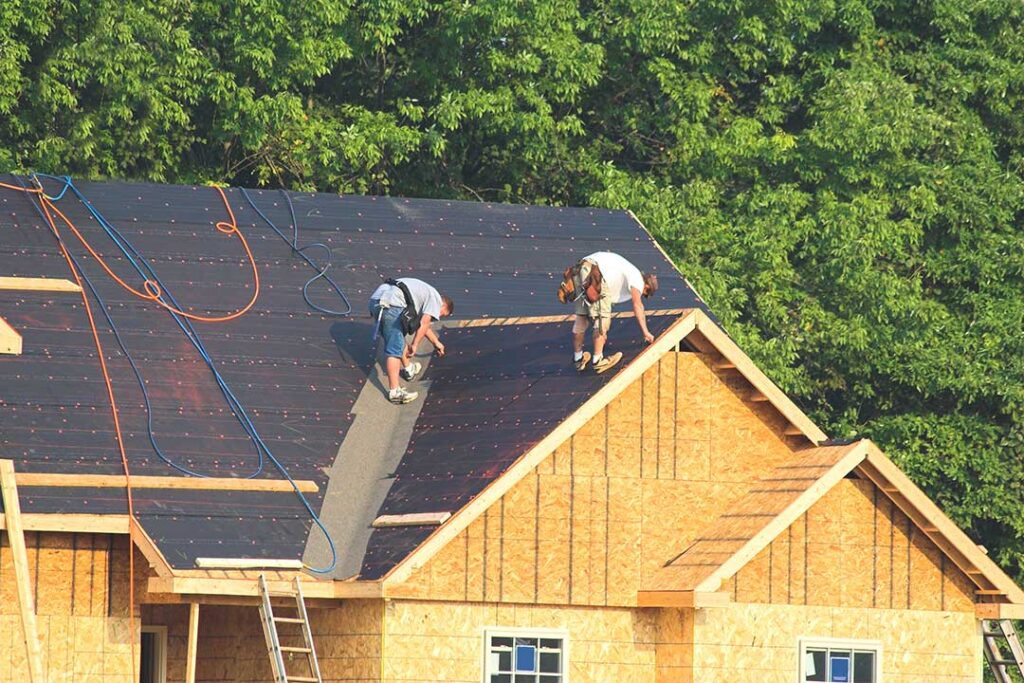
What is a cool roof?
A cool roof is designed to reflect more sunlight and release absorbed heat more effectively than a conventional dark roof. As a result, the roof surface stays cooler on sunny days, reducing the amount of heat transferred into the attic and living areas below.
Cool roofing is not limited to one material. It can include:
- Light-colored asphalt shingles
- Reflective metal roofing
- Coated low-slope roofing membranes
- Reflective roof coatings
- Certain specialty roofing products designed for higher solar reflectance
Roof color matters, but it is not the only factor. A roof’s solar reflectance and thermal emittance determine how well it reflects sunlight and releases heat. Some modern products are designed to perform as cool roofs without being bright white.
How can a cool roof make a house more comfortable?
The main comfort benefit appears during sunny summer weather. A conventional dark roof can become substantially hotter than the surrounding air, especially when the roof receives direct afternoon sunlight. That heat can pass through the roof assembly and raise attic temperatures.
A cooler roof surface can reduce heat buildup in the attic and upper rooms. Residents may notice:
- Less heat radiating through ceilings
- More stable indoor temperatures on sunny afternoons
- Reduced reliance on window air conditioners
- Better comfort in finished attic rooms
- Less heat stored in the roof after sunset
The effect depends on the entire building assembly. A reflective roof cannot compensate for major air leaks, inadequate attic insulation, blocked ventilation, or poorly sealed ductwork. In many homes, improving insulation and air sealing provides as much or more benefit than changing roof color alone.
Can cool roofs reduce energy use?
They can reduce summer cooling demand, particularly in homes with air conditioning and roof areas that receive strong sun. By limiting heat transfer through the roof, a cool roof may allow cooling equipment to run less often or for shorter periods.
The savings are not identical from house to house. Important factors include:
- Roof pitch and orientation
- Amount of shade from trees or nearby structures
- Attic insulation levels
- Roof color and material
- Size and efficiency of the cooling system
- Whether the home has air conditioning
- Amount of conditioned space directly below the roof
For a home that does not use much air conditioning, the financial savings may be modest even if the upper floors feel more comfortable. For a tightly sealed, well-insulated home, the roof’s effect may also be less noticeable because less heat reaches the interior in the first place.
Are cool roofs useful in Geneva, NY?
Yes, but their benefits need to be understood within a four-season climate. Geneva, NY experiences warm, sunny periods as well as long heating seasons, snow, freeze-thaw cycles, and periods of high humidity.
Cool roofs generally provide their clearest energy advantage in hot, sunny climates. In a northern climate, the summer cooling benefit may be smaller, while increased reflectivity can reduce some passive solar warming during winter. This is sometimes called a heating penalty.
That does not make cool roofing unsuitable for local homes. It means the roof should be considered as part of the whole building rather than as a stand-alone energy upgrade. The decision may make more sense for:
- Homes with hot upper floors
- Houses with large south- or west-facing roof sections
- Buildings with limited attic insulation
- Properties with significant summer air-conditioning use
- Low-slope roofs with broad, sun-exposed surfaces
- Homes where roof replacement is already planned
For a well-insulated home with little cooling demand, the practical advantages may relate more to summer comfort and material performance than to large annual energy savings.
Can a cooler roof last longer?
Lower roof temperatures may reduce thermal stress on some roofing materials. Repeated heating and cooling cause roofing components to expand and contract. Over time, that movement can contribute to aging, especially when combined with ultraviolet exposure, moisture, wind, and freeze-thaw conditions.
A cooler surface may slow certain forms of heat-related degradation, but it does not guarantee a longer roof life. Installation quality, underlayment, ventilation, drainage, material selection, snow loads, ice formation, and maintenance remain major factors.
In Geneva, winter conditions deserve particular attention. A roof still needs suitable underlayment and ice-barrier protection where required, properly installed flashing, secure edges, and effective drainage. Reflectivity does not prevent ice dams, leaks, wind damage, or snow-related problems.
Do cool roofs prevent ice dams?
No. A cool roof should not be treated as an ice-dam solution.
Ice dams are usually connected to uneven roof temperatures, heat escaping into the attic, snow cover, roof geometry, and inadequate ventilation. A reflective roof may stay cooler in sunlight, but it does not replace proper attic insulation, air sealing, ventilation, or ice-barrier measures.
In winter, practical priorities include keeping indoor heat from leaking into the attic, maintaining clear ventilation paths, and ensuring that roofing details are appropriate for snow and ice exposure. If an existing roof has recurring ice-dam problems, changing to a lighter color alone is unlikely to correct the underlying cause.
What should homeowners consider before choosing one?
The best time to evaluate cool-roof options is during planned roof replacement or another major roofing project. Replacing a sound roof solely to change its reflectivity may not produce enough energy savings to justify the added material and labor.
Before choosing a product, consider:
- Whether the roof is steep-slope or low-slope
- How much direct sunlight the roof receives
- The condition of the existing roof deck
- Attic insulation and ventilation
- Local snow, ice, and wind exposure
- The expected service life of the roofing material
- Compatibility with flashing, underlayment, and drainage details
- Applicable New York State building and energy-code requirements
Product labels and technical information can help compare solar reflectance and thermal emittance. A lighter appearance does not automatically mean a roof is certified or tested as a high-performing cool roof.
Is a white roof always the best choice?
No. White roofs often reflect substantial sunlight, but appearance is only one part of performance. Some darker products use reflective granules, pigments, or finishes that perform better than their color might suggest.
Roof design, insulation, ventilation, shading, and material quality all influence results. A visually bright roof with poor installation details can perform worse than a properly installed darker roof with excellent insulation and air sealing.
The most balanced approach is to select roofing materials that suit the building’s structure, winter conditions, appearance, maintenance expectations, and summer comfort needs. For many local households, a cool roof can be a useful part of a broader roof and attic improvement plan rather than a stand-alone energy solution.
What is the practical takeaway?
Cool roofs can lower roof temperatures, improve summer comfort, reduce cooling demand, and potentially slow some heat-related material aging. Their benefits are usually strongest on sunny buildings with significant cooling needs and limited insulation.
In Geneva, NY, the decision requires a seasonal perspective. Summer reflectivity matters, but so do winter heating needs, snow and ice protection, attic performance, drainage, and compliance with current building requirements. A roof that manages heat, moisture, snow, and ventilation as a complete assembly will generally provide more reliable results than a roof selected by color alone.
